A fjord flight where everyone sees out. This Misty Fjords floatplane tour puts you in a 6-seat De Havilland Beaver with noise-canceling headsets and voice communication, so you can ask questions as the pilot narrates. I like that the flight design gives you a view from every seat, not just the lucky ones. The main thing to plan around is weather: the experience can be re-timed or refunded if flying conditions don’t cooperate.
You’ll start at Ketchikan Cruise Ship Berth 2 at the Liquid Sunshine Gauge outside the Ketchikan Visitors Bureau, then ride about 15 minutes to the airport area. From there it’s safety briefing, a takeoff, and a loop through the monument before you return and finish back at the cruise port. I also appreciate that the tour is kept tight—a maximum of 12 travelers, and the plane holds six—so it doesn’t feel like a bus ride with wings.
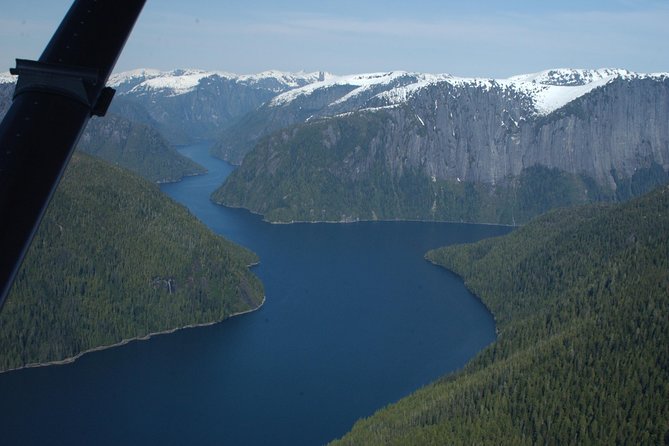
Up above, Misty Fjords is road-less and massive, with steep-walled inlets, glacial-carved cliffs, waterfalls, and hanging alpine lakes. Expect misty rainforest along the water, and watch for animals like harbor seals and mountain goats when the pilot spots them. The one practical drawback is simple: you should dress for changing conditions, since you’re in open air on a small plane and you’ll want warm layers.
In This Review
- Key Points You’ll Care About
- Getting To the Plane in Ketchikan: Berth 2, the 15-Minute Hop, and Fast Moving
- Your 2.5-Hour Flight: Smooth, Loud-Headset Comfort, and What the Time Includes
- Misty Fjords National Monument Overhead: Glaciers, Waterfalls, and Hanging Lakes
- The Lake Landing Moment: Why This Tour Isn’t Just Scenic Flying
- Small-Plane Design: Window Seats for Everyone, Headsets for Real Conversation, Better Photos
- Price and Value: $425 Sounds Steep, Until You Think About What You Get
- Who This Tour Fits Best (and Who Might Want Another Option)
- Weather, Turbulence Feel, and Day-of Flexibility
- Local Pilot Energy: What Makes the Flight Feel Like More Than a Tour
- Should You Book the Misty Fjords Seaplane Tour?
- FAQ
- How long is the Misty Fjords Seaplane Tour?
- Where do I meet for pickup in Ketchikan?
- What’s included in the $425 price?
- Do I get a window seat?
- Does the tour land on a lake or in a bay?
- Is food provided during the tour?
- What should I wear?
- What if weather prevents the flight?
- How big is the group?
Key Points You’ll Care About
- Guaranteed window seats for every passenger on a 6-passenger seaplane
- Voice-activated, noise-canceling headsets so you can talk with the pilot during flight
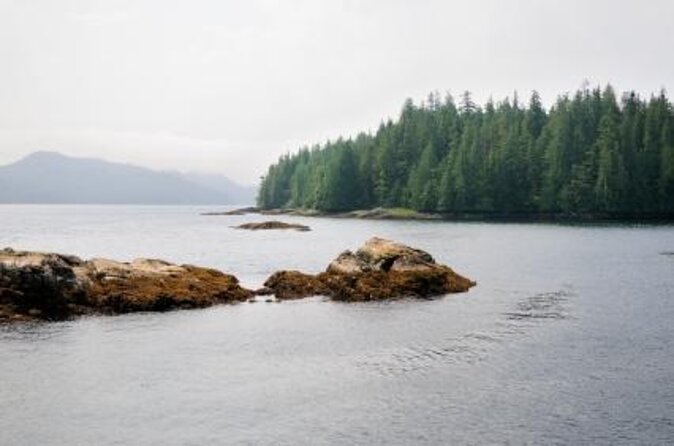
- Real shore time: you land on an alpine lake or calm bay and get a quiet walk and photos
- Small-group feel: maximum 12 travelers, using well-maintained 6-seat De Havilland Beaver floatplanes
- Water landings built into the route—including a return float where you stay on the water for about 30 minutes
- Pilot-led flying over glacial fjords, with narration focused on what you’re actually seeing
Getting To the Plane in Ketchikan: Berth 2, the 15-Minute Hop, and Fast Moving
This tour is built for cruise schedules, which matters in Ketchikan. The day starts right at the cruise port area: you meet outside the Ketchikan Visitors Bureau at the Liquid Sunshine Gauge on Cruise Ship Berth 2, then you transfer by van to the airport, about 15 minutes away. It’s a straightforward setup—no long waits in the wrong place hoping the tour finds you.
Once you meet your pilot, there’s a safety briefing and then you’re boarded on the small floatplane. Here’s why I like this flow: it cuts down on wasted time. You’re not spending half the day commuting and the other half standing around. You’re on the water and in the air, and the scenery does the heavy lifting.
One small planning note: you’ll want a contact phone number tied to the booking, and if you’re on a cruise you’ll need to share your ship name so the pickup matches your arrival. That’s not “fun info,” but it’s the kind of detail that prevents stress when ships turn into moving targets.
You can also read our reviews of more tours and experiences in Ketchikan.
Your 2.5-Hour Flight: Smooth, Loud-Headset Comfort, and What the Time Includes
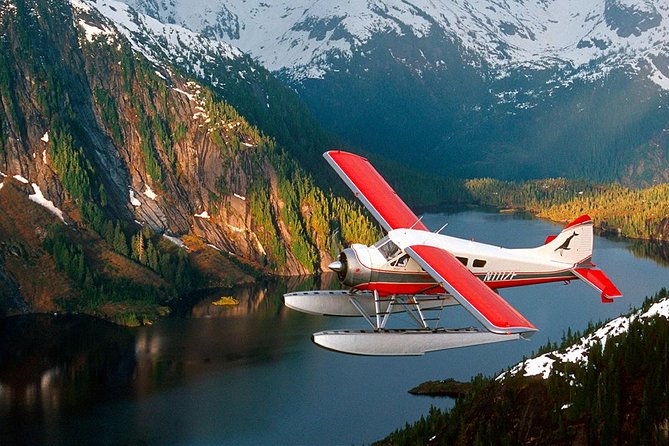
On paper, it’s about 2 hours 30 minutes, and that total works because most of it is actual flying plus the signature landings. After you take off, you spend a lot of time moving through the fjords in different “views,” not just one straight shot. You’ll cross toward the monument area, fly the coastline and fjord walls, and then come back with another water landing as the tour wraps up.
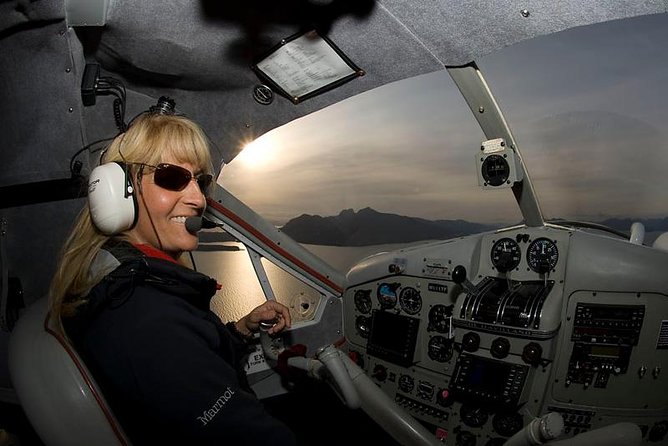
What makes the flight feel practical is the setup in the cabin. Each passenger gets noise-canceling headsets with voice communication, and you can ask questions while the pilot narrates. In a place like Misty Fjords—where the features are mostly vertical cliffs, waterfalls, and water basins—that kind of commentary is gold. You’re not just staring at gray-green water and hoping you’ll recognize what you’re seeing.
Also pay attention to the pace during the flight itself: the pilot is the storyteller and navigator. Your job is to look out and listen. And if you get the urge to take photos constantly, that’s normal—just remember you’ll have a much better chance to get steady shots during the lake landing and on calm water.
Misty Fjords National Monument Overhead: Glaciers, Waterfalls, and Hanging Lakes
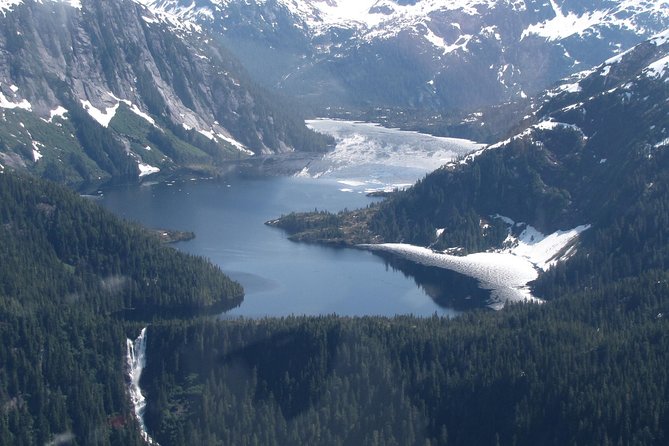
Misty Fjords National Monument is huge and famously road-less. The monument covers 2.3 million acres—more than Yellowstone—and that scale is hard to grasp from sea level. From the air, it clicks fast: deep, narrow fjords cut into steep terrain, and the cliffs rise dramatically from the water. You’ll see sheer granite walls, with waterfalls dropping thousands of feet from above.
You’re also flying over layers of the monument—coastline, islands, mainland fjords, and higher basins. The tour route is designed around that idea, not a random loop. You’ll head toward the area through Revillagigedo Island and across to the Alaskan mainland, then into the heart of the monument.
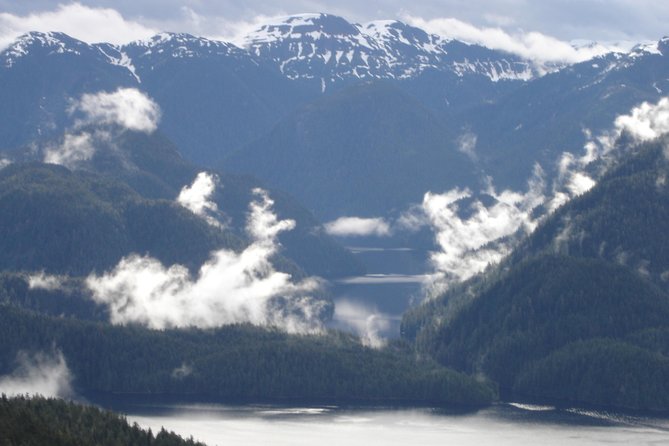
One thing I’d highlight if you’re trying to picture it: Misty Fjords isn’t just cliffs. It’s also rain forest and alpine features stacked on top of each other. With more than 150 inches of misty rain a year, the rainforest clings to the terrain, with spruce, hemlock, and cedar. And above many of the fjords, you can spot bowl-shaped alpine lakes suspended at different elevations—these are the quiet basins that make the later landing feel so special.
If you’re a wildlife watcher, keep your eyes open. Mountain goats and harbor seals are frequently spotted in the region, and the pilot’s job is to put you in a position to see what’s possible that day.
The Lake Landing Moment: Why This Tour Isn’t Just Scenic Flying
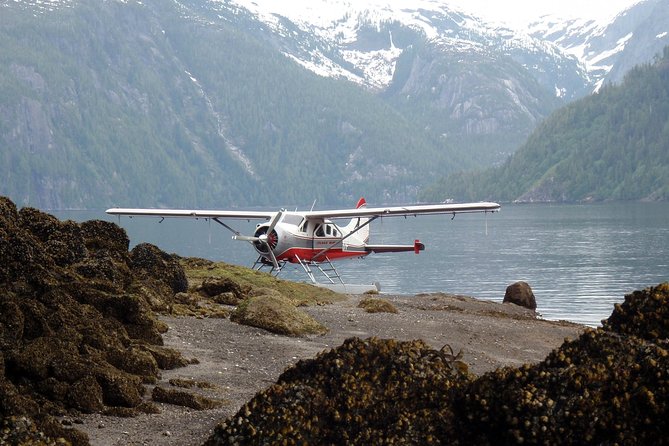
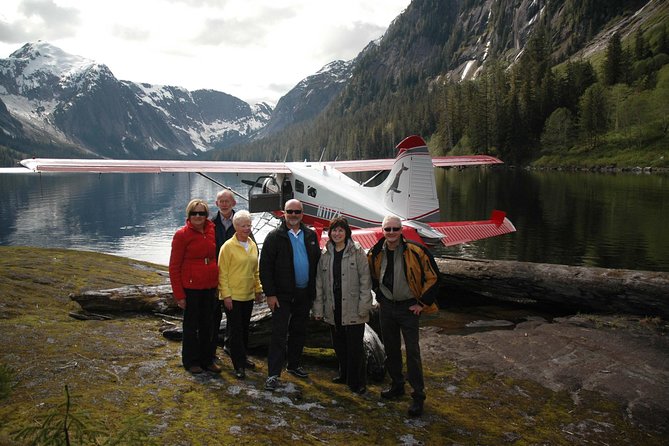
The signature reason to book this type of flight is the chance to get out on something other than a viewpoint. During the highlight portion of the tour, the plane lands on an alpine lake or a calm bay at sea level. Then you can step off the floatplane for a quiet excursion—think short walking time, a chance to stretch, and the kind of photos you can’t take from a seat.
This is where the experience stops being “pretty air” and becomes something you can remember with a sense of place. Floating on calm water, hearing less wind noise, and stepping onto a remote shoreline changes your brain’s scale sense. The fjords stop being a TV image and become your surroundings.
Practical reality check: the exact landing spot depends on conditions. The tour description is clear that you might land on an alpine lake or a calm bay, and the pilot chooses what’s available and safe. Either way, the value is similar: you get a real ground moment inside the monument, not only an overhead pass.
The tour also includes a return water landing where you’ll float for about 30 minutes. That gives you another chance to look closely at the waterline and cliffs and, if you’re lucky, just enjoy the silence for a bit before you’re back in the van.
Small-Plane Design: Window Seats for Everyone, Headsets for Real Conversation, Better Photos
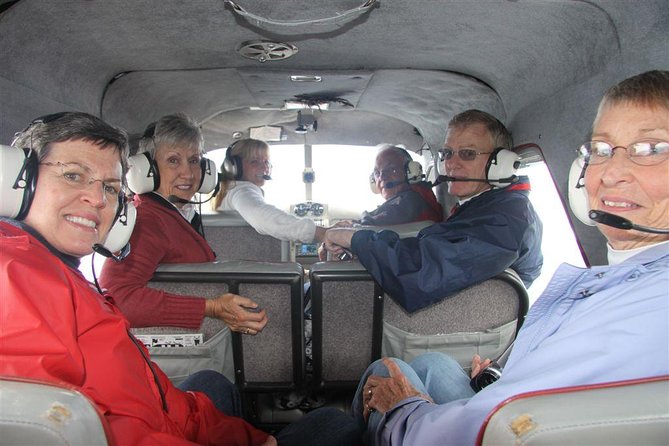
A lot of scenic tours say you’ll get great views. This one actually builds the view into the seating. The plane is designed for six passengers, and the tour includes guaranteed window seats for every person. That’s a big deal when you’re flying over cliffs and narrow water. If you’re used to tours where only two seats matter, this feels refreshingly fair.
Then there’s the communication system: voice-activated, noise-canceling headsets. That means you’re not stuck with one-way narration. You can ask what you’re seeing as you’re seeing it. It’s also useful for practical questions like where the waterfalls are coming from, how the fjords were formed, or what a certain feature might be.
In the real world, that matters because Misty Fjords is visually complex. You don’t have road signs to help you orient. The narration helps you connect the dots: glacial gouging, sheer granite, hanging basins, and how rain shapes the rainforest on the slopes.
For photography, the lake landing is your best friend. Overhead shots are great, but the most dramatic angles often come when you’re on the water or standing close to the landing spot. And because the group size is small, you aren’t fighting for space to shoot.

Price and Value: $425 Sounds Steep, Until You Think About What You Get
At $425 per person for a roughly 2.5-hour experience, this is not a cheap excursion. But value isn’t only about time—it’s also about access.
You’re paying for:
- A small floatplane with guaranteed window seats
- A route deep into a road-less national monument
- Pilot-led narration with live headset communication
- A landing that lets you step out for photos and a quiet walk
- Use permissions that enable shore stops within the monument (not every operator can do that)
If you’re comparing options in Ketchikan, this is the type of tour that replaces a lot of guessing with a planned “do the thing” moment: fly the fjords, land on water, then land on a lake or bay. That kind of access usually costs more, because it can’t be replicated from a bus or a ferry deck.
The best way to judge value for your own trip: ask yourself whether you want just views, or whether you want the experience of being on the fjords themselves. If you’re the type who takes in scenery with your body—standing on land, hearing water slap softly, getting steadier photos—this price starts to make sense.
Who This Tour Fits Best (and Who Might Want Another Option)
This tour is a strong fit if you:
- want a high-impact Ketchikan highlight in a short timeframe
- like geology, waterfalls, and how glacial landscapes form
- value small-group experiences where you actually hear the pilot and can ask questions
- want the special moment of stepping out during the lake landing
It’s also a good match for families and couples, especially because the plane size is small and each seat is a window seat. If you’re sensitive to noise or confused by one-way narration, the headset setup is a clear benefit.
What might not work as well: if you’re looking for a relaxed, slow-paced half-day with lots of downtime on the ground. This is an air-and-water experience. You’ll be moving, and most of your time is in the air and at short landing stops.
Also, bring realistic expectations about weather. Misty Fjords is weather-driven, and this experience requires good conditions. When weather is rough, plans can change quickly.
Weather, Turbulence Feel, and Day-of Flexibility
The tour requires good weather, and if flying isn’t possible due to poor conditions, you’ll be offered a different date or a full refund. That’s important because it means you shouldn’t book this as your only must-do if your schedule is inflexible.
As for turbulence: the small floatplane can feel like a jumpy ride to some people, especially in gusty conditions. The data you provided doesn’t promise calm water every time, so keep your mindset flexible. Dress in layers, sit steady, and remember the pilot chooses routes and flying choices based on conditions.
One practical tip that helps on the day: since fog and changing skies can happen in the region, listen closely to pilot updates during briefing and in-flight communication. If the pilot adjusts the route, it’s usually to protect comfort and visibility—not to disappoint you.
Local Pilot Energy: What Makes the Flight Feel Like More Than a Tour
What repeatedly stands out in the experience style is that the pilot isn’t just a driver. It’s a guided flight. Names that show up in the provided information include Michelle and Adam, both described as highly experienced and friendly, with a knack for pointing out landmarks and explaining what you’re seeing.
I like this because it changes how you remember the trip. You don’t just recall a photo. You recall the meaning behind the cliffs, the water, and the rain-forest slopes. And that matters more than you think when you’re looking at features that all blur together visually unless someone helps you sort them.
Should You Book the Misty Fjords Seaplane Tour?
If you want one Ketchikan activity that feels like you truly accessed Misty Fjords, I’d book this. The big reasons are practical: window seats for everyone, the headset setup for live questions, and the chance to land on a lake or calm bay and step out for a quiet moment.
If your schedule is extremely tight and you hate the idea of weather rescheduling, build in mental flexibility. And double-check your date before you show up, because this kind of tour has limited ability to fix mistakes once you’re past the planning window.
Overall: for the price, you’re not just buying views. You’re buying a small-aircraft experience that gets you onto the fjords—literally onto water and sometimes onto a mountain lake.
FAQ
How long is the Misty Fjords Seaplane Tour?
It lasts about 2 hours 30 minutes.
Where do I meet for pickup in Ketchikan?
You pick up outside the Ketchikan Visitors Bureau building at the Liquid Sunshine Gauge on Cruise Ship Berth 2.
What’s included in the $425 price?
Pickup and drop-off by Island Wings van, interactive narration with the pilot, voice-activated noise-canceling headsets, guaranteed window seats, and the required US Forest Service special use permit for shore stops within Misty Fjords.
Do I get a window seat?
Yes. The tour guarantees window seats for every passenger.
Does the tour land on a lake or in a bay?
Yes. The highlight includes landing on an alpine lake or on a calm bay at sea level, and you can get off for a quiet excursion.
Is food provided during the tour?
No food is provided, and no food or drinks are allowed on the floatplane except bottled water.
What should I wear?
Wear layered clothing and comfortable walking shoes.
What if weather prevents the flight?
If it’s canceled due to poor weather, you’ll be offered a different date or a full refund.
How big is the group?
The tour has a maximum of 12 travelers, and it operates six-passenger DeHavilland Beaver floatplanes.