REVIEW · ALESUND
Trollstigen 100% Highlights Fjord to Troll 10 stops 16 seats max
Book on Viator →Operated by Royal Tur Reiser As · Bookable on Viator
Trollstigen feels like nature built a roller coaster. This 16-seat day links Ålesund fjords to Trollstigen viewpoints, with short walks, big windows, and weather-ready extras when the skies change fast.
I love how the group stays small, so owner-driver Rolf can keep things moving without feeling rushed. I also love the “bonus content” built into the ride: an onboard drone video plus city and fire history films, with lunch timed for when you need it.
The only real trade-off is that it’s a full day with lots of stop-and-go. You’ll be out for short distances at several viewpoints, so comfortable shoes matter.
In This Review
- Key things you should notice before you go
- The 16-seat luxury setup that actually changes your day
- Start in Ålesund: Aksla Mountain for the 360-degree Fjord City moment
- Sjøholt Hotel: Swiss-style landmark stories from the bus window
- Stordal and Kopparsteinen: the fjord view plus road-builder history
- Liabygda Church: where the fjord splits toward Tafjord and Geiranger
- Gudbrandsjuvet: walking bridges over waterfalls with glass-and-rust engineering
- Øvstestølen in Valldal: a 500-year-old mountain farm view
- Trollstigen top viewpoint: 863 meters, clean air, and a tree-less feel
- The Trollstigen viewpoints: 11 hairpin bends and the Stigfossen moment
- Trollstigen Gjestegård: trolls, souvenirs, and ice cream included with ID
- Trollstigen foothill viewpoint plus the final “keep it” moment
- Returning to Ålesund: art nouveau streets and a local driving loop
- Price and value: $278.28 for a packed day that’s built for comfort
- Who this tour is best for (and who should pick something else)
- Should you book Trollstigen 100% Highlights Fjord to Troll?
- FAQ
- What’s the duration of the Trollstigen Fjord to Troll tour?
- How many people are on this tour?
- Is the tour offered in English?
- What food and drinks are included?
- Are there toilets during the day?
- Can I cancel for a full refund?
Key things you should notice before you go
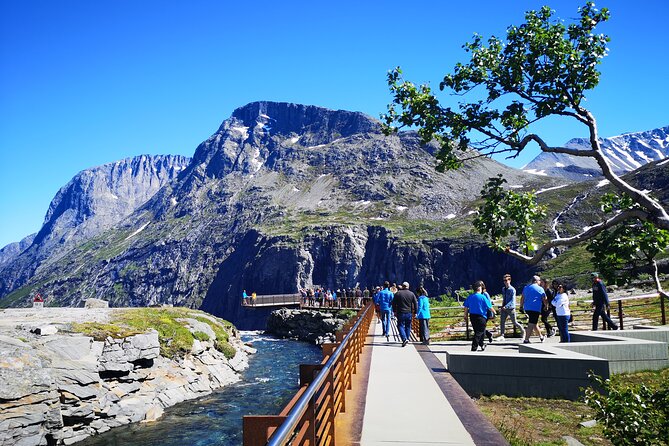
- Small 16-passenger format with extra-large panoramic windows, so the views stay front and center instead of blocked by big-bus crowds.
- Owner-driver Rolf runs the day and shares local stories that make fjords and farms feel personal, not just scenic.
- Drone video of Ålesund and Trollstigen (about 25 minutes) plus onboard films that add context while you’re traveling.
- Practical comfort system on board: bottled drinks self-service, warm bus, umbrellas ready if it rains, and blankets if you get cold.
- Trollstigen engineering moments up close: the 11 hairpin bends, the 180-meter Stigfossen bridge view, and multiple viewpoints with short walks.
- Local extras: lunch bag after about 3 hours, and Troll ice cream at Trollstigen Gjestegård when you show your Royal Tour Travel ID card.
The 16-seat luxury setup that actually changes your day
This tour is built around a simple idea: less crowd, more time seeing things. With a maximum of 16 travelers, you don’t feel like you’re waiting in a swarm for the next photo angle. The bus also has extra-large panoramic windows, which matters on this route. You’re constantly passing fjords, farms, and steep mountain walls, and being able to see without leaning or crowding improves the whole experience.
Comfort details are also not just marketing. There’s self-service glacier water and mineral water (plus Coca-Cola and Fanta). You’ll get a lunch bag on board after the first stretch of driving, and the vehicle is warmed before you head out at stops. If rain shows up, umbrellas are staged by the door when you disembark. And yes, they even note small extras like paper napkins plus headache and allergy tablets in case the day goes sideways.
From the reviews, the service style is consistent: Rolf is described as planning the itinerary tightly while still letting the group set a comfortable pace at viewpoints. That’s a big deal on Trollstigen days, when weather and crowds can change fast.
You can also read our reviews of more tours and experiences in Alesund.
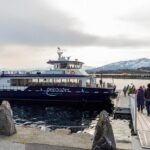
Start in Ålesund: Aksla Mountain for the 360-degree Fjord City moment
You begin with Aksla Mountain, a quick hop from Ålesund. You’ll drive about 5 km in around 15 minutes, then walk roughly 50 meters to the viewpoint. Toilets are available there too, which is useful early in the day.
What you’re chasing here is the “whole picture” view. The description is clear: with sea around the city and mountains closing in, Aksla gives a full 360-degree look out across fjords and islands. Ålesund also has a stairway legend tied to this area: 418 steps built in 1885, opened 15 years later, then improved in 2014 to safer stairs that still copy the old look.
Timing note: there’s also a drone video segment shown on the bus shortly after. It’s about 25 minutes and sets expectations for what you’ll see later at Trollstigen.
Practical tip: if the weather shifts, Aksla is one of your best bets to catch clear angles. Keep your camera ready right after you get out. Short walks mean you don’t want to spend extra time digging through bags.
Sjøholt Hotel: Swiss-style landmark stories from the bus window
Next up is Sjøholt, about 40 km and 45 minutes of driving. You won’t get out here. You stay on board and view the landmark hotel from the road while the story plays out.
Sjøholt Hotel first came together in 1887. It’s Swiss-style with a tall facade and glass-clad verandas, and it’s recognized as a protected national building. It’s also known as a stop where European royals and famous people once stayed, when long-distance travel took real days.
Why this stop works: it teaches you how the region thought about travel before modern roads and buses. It also keeps the pacing smooth. On a day like this, you don’t want too many long walks back-to-back.
Stordal and Kopparsteinen: the fjord view plus road-builder history
Stordal is a short drive (about 9 km, 15 minutes). At Kopparsteinen, the walk is around 10 meters to reach the viewpoint. This stop is open, and it’s all about pairing a fjord view with a small slice of old-world purpose.
The key detail here is Kokarsteinen by Storfjorden (between Vaksvik and Dyrkorn). It was used as shelter and a cooking area for the people who helped build the road. Today, not much remains maintained, but the view is the point.
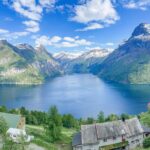
You’ll look across the fjord to the mountain farm Ytste Skotet. That farm has been inhabited since the Viking Age. The traditional farming system lasted until 1954, with grain in the infield and grazing and mowing in the outfield. The day’s guide recommends binoculars, which tells you this is worth pausing for details rather than rushing a quick snapshot.
Practical tip: if you’re traveling with binoculars already, this is a good moment to use them. If not, you can still enjoy the view, but you might miss tiny shape details across the fjord shelves.
Liabygda Church: where the fjord splits toward Tafjord and Geiranger
This stop is about 23 km and 30 minutes into the route, and it’s set up along the road as you move toward the Geiranger/Tafjord direction.
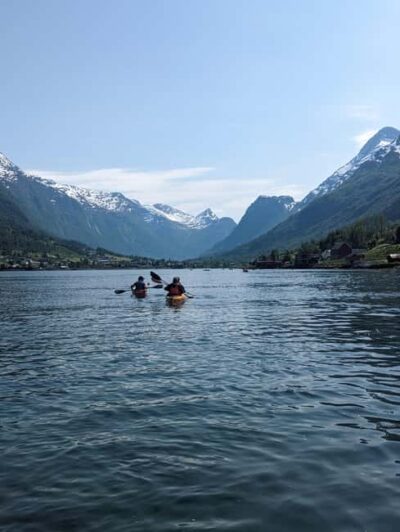
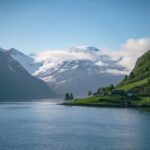
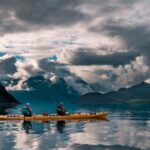
Here’s the concept: the fjord splits in two. One branch continues toward Tafjord, which has Norway winter temperature heat records noted for that region. The other branch heads toward Geiranger, and yes, cruise ships follow that path.
Even if you don’t know Norway’s fjord geography yet, you’ll recognize the effect instantly. The fjord is described as deep as the mountains are high. That’s the whole magic: scale.
You don’t need a lecture to appreciate it, but Rolf’s storytelling helps you read what you’re seeing. It becomes less random scenery and more a real transportation corridor that shaped settlement.
Gudbrandsjuvet: walking bridges over waterfalls with glass-and-rust engineering
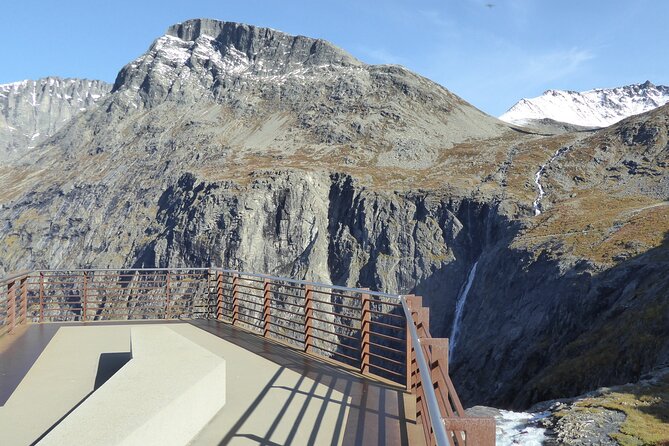
At Gudbrandsjuvet, driving time is about 27 km and 30 minutes. You walk about 50 meters to a viewpoint, and there’s a toilet stop too. After this stop, a lunch box is served, so it’s one of the day’s natural “energy checkpoints.”
The big draw is walking on bridges that cross and criss-cross waterfalls in a way that feels engineered by water itself. The description emphasizes that the water flows through gorges and cracks, meets unexpectedly, then passes under the bridge and drops further down.
The engineering details are specific: the gully is partly shaped by large potholes, and there are platforms and bridges built with a mix of glass and rust-corroded iron in the walls. The point isn’t the materials for their own sake. It’s that you get safe, close access to a lot of motion that you usually can only see from far away.
Reality check: waterfalls mean spray. Even when the day is sunny, plan for damp ground and wet reflections. You already have umbrellas on the bus’s comfort list, and that’s exactly for moments like this.
Øvstestølen in Valldal: a 500-year-old mountain farm view
Next is Øvstestølen, only about 2 km and 15 minutes of driving. You walk roughly 40 meters to the viewpoint, and the description is all about altitude and old farm life.
Øvstestølen sits around 500 meters above sea level. The stop focuses on the mountain pastures and the stöl tradition—seasonal high-elevation grazing and dairy work. One house here is said to be about 500 years old.
The day’s view includes a river and a small stone bridge, with fewer tall trees around you at this elevation. In the background you can see part of the settlement and a steep mountain called Bjorstadfjellet.
For context, it notes full-season use: in 1939 there were usually 50–60 dairy cows in summer, plus young cattle, bulls, and horses. Then, when the Trollstigen road was built, houses on Øvstestølen were used as accommodation for road workers.
Why I like this stop: it reminds you that Trollstigen isn’t just a fun photo line. It was built by people who lived nearby and adapted their daily lives to road construction.
Trollstigen top viewpoint: 863 meters, clean air, and a tree-less feel
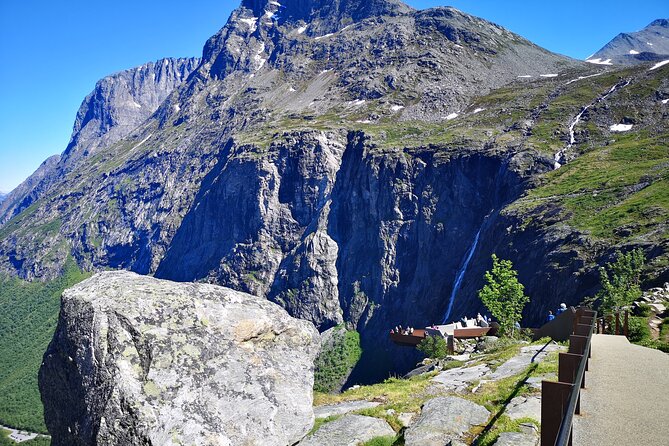
Now you’re into Trollstigen itself. The drive is about 13 km and 15 minutes, and you reach the highest point on the route: 863 meters above sea level. The walk to the viewpoint is short, around 10 meters, and the description notes there are no trees up here.
That absence changes your perception. Without tree cover, you get that direct sense of height and wind and sky. The air is described as fascinatingly clean, and the terrain is compared to a lunar landscape. Even if you’ve seen mountain viewpoints elsewhere, this one tends to feel exposed and dramatic.
The practical benefit: short walk, big payoff. Stay put, let your eyes adjust, and take a few photos from the same spot before you move. Colors can shift with sun and shadow on the mountainsides, and it’s worth catching that change.
The Trollstigen viewpoints: 11 hairpin bends and the Stigfossen moment
This is the heart of the day. You’ll make several Trollstigen stops, each with different angles on the same engineering and waterfall drama.
One key fact: Trollstigen’s road opened on 31 July 1936, by King Haakon VII. Another: from 1992 it became part of Norway’s Golden Route tourism product.
Here’s the engineering scale you’ll see in real life:
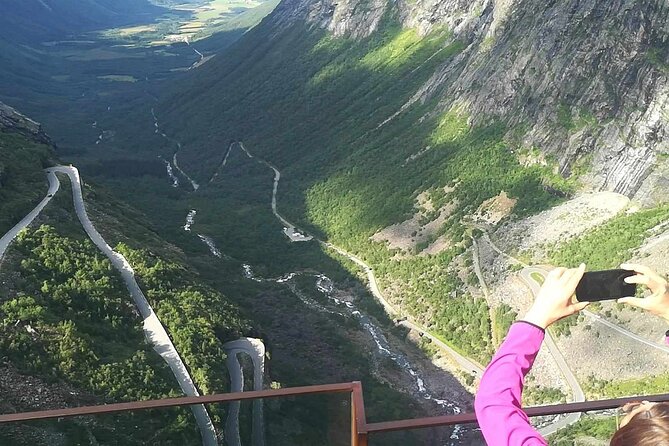
- There are eleven hairpin bends, each with a radius about 10 meters.
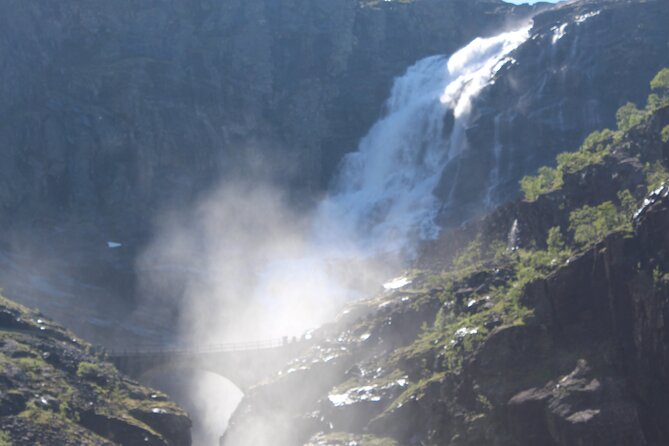
- There’s a bridge under the 180-meter-high Stigfossen.
- When water flow is high, water splashes over that bridge view.
In the stops, you’ll get different levels of access:
- At one Trollstigen stop, you walk roughly 50–200 meters to a viewpoint, plus there’s a souvenir area and a toilet stop.
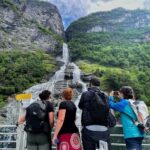
- Another stop brings you near the bottom for an even more “wow, that’s huge” angle, with a short walk around 10 meters and a strong view of the waterfall, bridge, and steep rock lines.
You’ll feel small in the face of the mountains and the thousand-meter scale described in the route notes. That’s exactly what makes this stop memorable: you’re not just looking at a valley. You’re looking down a road that was designed to survive serious terrain.
Tip for your photos: keep your lens angle lower than you think. Many people shoot from above the viewpoint line and end up losing the road curves. If you can, angle so the hairpins lead your eye toward Stigfossen.
Trollstigen Gjestegård: trolls, souvenirs, and ice cream included with ID
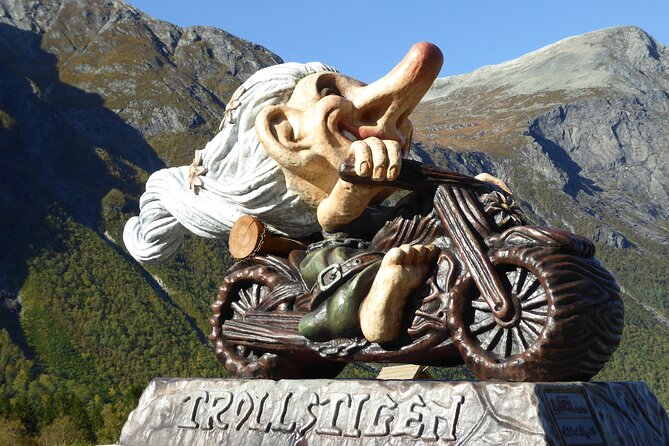
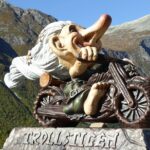
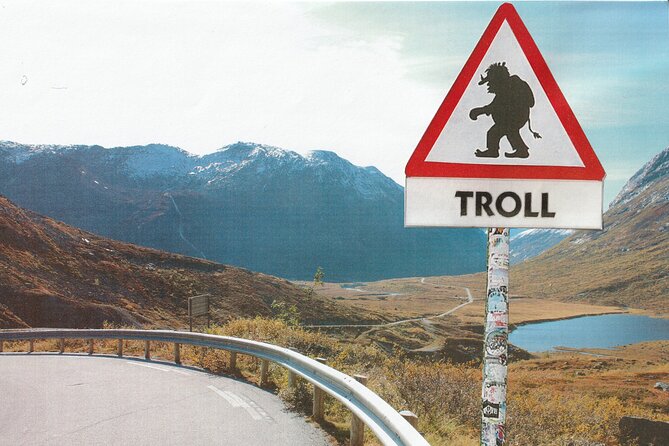
At one point you reach Trollstigen Gjestegård. This is where you meet the big trolls with different expressions—said to be kind, even if they look a little frighteningly large. There’s also a souvenir shop.
One very practical bonus: Troll ice cream at its best is included if you show your Royal Tour Travel ID card. That’s a neat little payoff at the end of a long set of viewpoints, and it helps justify the total day time.
If you want a break before the final viewpoint and the return drive, this is the best spot. It’s also where you can reset your phone batteries and decide whether you want one last photo round.
Trollstigen foothill viewpoint plus the final “keep it” moment
You’ll also visit a Trollstigen foothill viewpoint designed to wrap the story together. You get panoramic views over Gubransdalsjulvet and Trollstigen, along with majestic waterfalls, old farms, small rivers, and wild mountains with snow-capped peaks noted in the route description.
This is the moment that helps the day make sense. Early stops teach you fjord geography and farming life. Midday stops show water power and old settlement. Trollstigen proper gives you the road-and-water engineering. This final viewpoint pulls it all into one wide frame so you can leave with a mental map, not just a camera roll.
Returning to Ålesund: art nouveau streets and a local driving loop
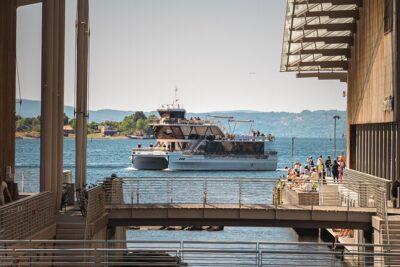
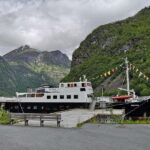
After Trollstigen, the day doesn’t just drop you at your hotel and call it done. You return to Ålesund, including a cruise ship harbor stop and toilet time (about 105 minutes of driving noted, plus bathroom break).
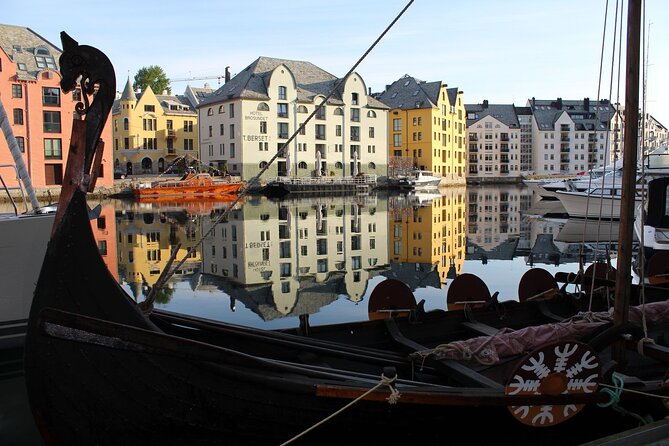
Then you get city sightseeing with local context, focused on Ålesund’s history and art nouveau style buildings. One stop concept also includes passing the oldest farm in Ålesund, dating back almost 500 years.
In the background on the bus, you also get historical films including Alesund city fire in 1904 and the new rebuilt city. That helps you understand why the architecture looks the way it does.
Practical note: if you’re on a cruise, this city time is especially helpful because it turns your shore day into more than just a single walk downtown.
Price and value: $278.28 for a packed day that’s built for comfort
At $278.28 per person for about 7 hours, this isn’t a bargain-price bus tour. But it’s also not overpriced for what you actually get if you care about the experience.
Here’s where the value comes from:
- Small group limit (16 max) with a luxury minibus, plus large windows and real comfort.
- Multiple paid experiences and viewpoints are included at each stop (the tour notes admission tickets as free for the listed stops).
- On-board extras that you can’t replicate on your own: drone video (about 25 minutes), onboard videos about the city fire, and picture books passed around.
- Food and drinks are covered: self-service water and soft drinks, plus a lunch bag after about 3 hours.
- Weather help is built in: umbrellas prepared at stops, warm-up of the bus, and blankets on board if you get cold.
- City sightseeing time is added, not just a one-way ride out and back.
If you’ve ever done a big coach day where you spend half your time waiting for the slowest passengers, you’ll understand why the small format matters. This tour is priced for that kind of “you’re not fighting the crowd” value.
One more point: the tour is often booked about 49 days in advance. That tells me it’s popular for good reason, so don’t assume you can grab last-minute spots.
Who this tour is best for (and who should pick something else)
This fits best if you want:
- A day trip with big scenery and short walks more than long hiking.
- A structured route with viewpoint timing and toilet stops.
- A local guide style that focuses on stories and practical context, not only geography.
It’s also a strong choice for cruise passengers because the itinerary clearly includes the Ålesund cruise ship harbor return.
Consider a different style of tour if:
- You hate packed schedules and frequent bus boarding.
- You need fully flexible time at each viewpoint. This day is designed with planned stops, even if Rolf can adapt pacing at moments.
Should you book Trollstigen 100% Highlights Fjord to Troll?
Yes, if your goal is a high-impact Trollstigen day without stress. This is one of those rare routes where the logistics support the magic: small group size, short walks at viewpoints, and comfort tools (umbrellas, warm bus, blankets) that keep you from losing the day to weather.
Book it if you want both sides of the story: fjord geography and old farm life, plus the engineering wow-factor at Stigfossen and the hairpin bends. And if you’re traveling in a season where conditions can turn quickly, the preparedness is not a gimmick.
If you want a calmer pace with fewer stops, you might prefer a slower, more flexible tour. But for most people doing Ålesund for the first time, this is a strong way to get the highlights without spending the entire day commuting and guessing where to stand.
FAQ
What’s the duration of the Trollstigen Fjord to Troll tour?
It runs for about 7 hours.
How many people are on this tour?
The maximum group size is 16 travelers.
Is the tour offered in English?
Yes, it is offered in English.
What food and drinks are included?
You’ll have self-service glacier water and mineral water (plus Coca-Cola and Fanta). A lunch bag is served in the bus after about 3 hours. Troll ice cream is included at Trollstigen Gjestegård when you show your Royal Tour Travel ID card.
Are there toilets during the day?
Yes. Several stops include toilet stops, including Aksla Mountain, Gudbrandsjuvet, one Trollstigen stop, and the return time at the Ålesund cruise ship harbor.
Can I cancel for a full refund?
Free cancellation is available up to 24 hours in advance for a full refund. Canceling less than 24 hours before the start time is not refunded.