REVIEW · COPENHAGEN
7-Day Scenic Scandinavian Tour from Copenhagen exploring Denmark, Sweden and fjords in Norway
Book on Viator →Operated by goEUgo International Limited · Bookable on Viator
Fjord views start on day three, not day ten. This 7-day Scandinavia loop is interesting because you move fast, see three countries, and still get built-in time for standout nature days. You’ll travel with an on-site tour guide and a professional driver, plus hotels and daily breakfast already handled.
I like that the tour includes comfortable 3-star hotel stays (private facilities, twin/double/single options) and six breakfasts, so mornings start with less stress. I also like the balance: big city sights in Copenhagen and Stockholm, then Norway’s glacier and fjord highlights that actually feel like a reward for sitting on the bus.
The main trade-off is exactly what you’d expect from a multi-country coach trip: a lot of time on the road. And weather can affect tight nature plans, like when a glacier stop gets canceled due to road issues, so build in flexibility.
In This Review
- Key things that make this trip work
- The big-picture route: how this 7 days is actually paced
- Copenhagen first: Little Mermaid, Amalienborg, and Andersen’s travel motto
- Stockholm City Hall and Vasa Museum: the best kind of museum pairing
- Day 3 in Norway starts with Lillehammer Olympic Park (not the town)
- Briksdal Glacier and Jostedalsbreen cable cars: the nature day you remember
- Sognefjord cruise and Flåmsbana railway: the fjord-fix in Flåm
- Oslo City Hall plus Vigeland Park: art and architecture with actual meaning
- Gothenburg’s Poseidon statue and Feskekôrka: seafood smells, quick city closure
- Price and what you really get for about $1,161.99
- The real on-the-road experience: buses, early mornings, and tour manager style
- Who should book this Scandinavia coach loop, and who should reconsider
- Should you book this Scandinavia Loop? My decision checklist
- FAQ
- Where is the tour meeting point and what time does it start?
- How long is the tour?
- What countries does the itinerary cover?
- Is the tour offered in English?
- What’s included in the tour price?
- Are attraction tickets included for the listed stops?
- Are lunch and dinner included?
- How much are gratuities and how are they paid?
- How big are the groups?
- What luggage limits should I follow?
- How long should my passport be valid?
- When can I cancel for a full refund?
Key things that make this trip work
- On-the-ground guide: you’re not left to figure everything out on your own.
- Copenhagen and Stockholm classics: Little Mermaid area, Amalienborg, Stockholm City Hall, and the Vasa Museum.
- Briksdal Glacier day: cable car views plus a short photo moment close to the glacier.
- Fjord combo in Norway: Sognefjord cruise from Gudvangen paired with the Flåmsbana railway from Flåm.
- Real stop-and-walk culture time: Oslo City Hall and Vigeland Park, not just photo stops.
- Group size capped at 30: easier logistics and more chances to ask questions.
The big-picture route: how this 7 days is actually paced
This tour is a classic “see the best of Scandinavia in one go” setup. You start in Copenhagen, head to Stockholm next, then shift gears into Norway’s glacier-and-fjord area before finishing in Oslo and Gothenburg, and finally returning to Copenhagen.
The pacing is designed for variety. City blocks in Denmark and Sweden are mostly guided orientation with museum and landmark time. Norway is more about movement through dramatic scenery: glacier viewpoints, a fjord cruise, and a famous rail ride through waterfalls and valleys.
Value-wise, the price (about $1,161.99 per person) feels more reasonable when you count what’s included: coach transportation with an air-conditioned modern bus, an on-site tour manager, and hotel rooms plus breakfast. What’s not included is also clear—attraction admissions, and lunch/dinner—so you’ll want a plan for meals.
One more practical detail that matters for comfort: it’s a maximum of 30 people. That’s big enough to meet other travelers, but small enough that the guide can keep things moving at a steady pace.
Copenhagen first: Little Mermaid, Amalienborg, and Andersen’s travel motto
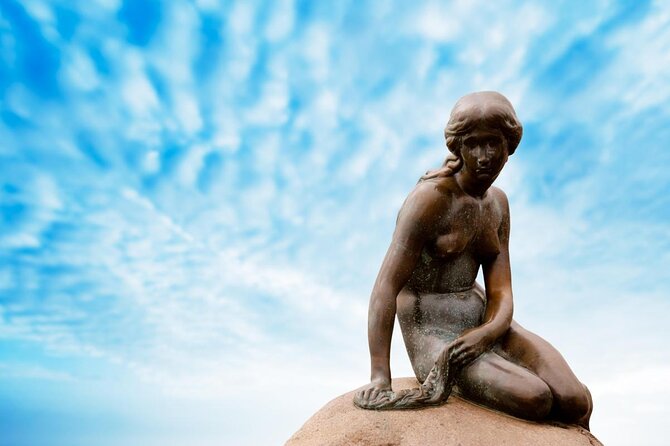
Day 1 is all about getting your bearings in Copenhagen. The first stop is the Little Mermaid area, tied to Hans Christian Andersen’s fairy-tale legacy. It’s a short visit, but it works as a quick cultural warm-up because the statue is basically a Danish symbol.
Next you’ll head to Amalienborg Palace Museum. This is where the tour becomes more than postcard sightseeing. Amalienborg is built as four identical Rococo palaces around a central square, and if you’re lucky you’ll catch the ceremonial changing of the guards, which happens every afternoon.
After lunch, you shift from Danish landmarks into storytelling mode with the H. C. Andersen Eventyrhuset area. You’ll learn how Andersen’s own traveling shaped the stories people still associate with Denmark today—his motto To travel is to live fits the spirit of the whole itinerary.
What to watch for: these early stops are time-efficient. If you want long museum hours or slow street wandering, you’ll likely want to add extra nights in Copenhagen before or after the tour.
Stockholm City Hall and Vasa Museum: the best kind of museum pairing
Stockholm is laid out across islands, and the tour handles that in a straightforward way: city tour first, then museum anchor stops. You’ll see Stockholm City Hall (Stadshuset) and get the highlight story of the building—especially the ballroom spaces used for the yearly Nobel Banquet.
Then the tour moves to the Vasa Museum. This is a big deal in the city for one simple reason: it’s not just another museum stop. It’s focused, dramatic, and easy to appreciate even if you’re not a ship-history person. You’ll also cover Old Parliament building context and Storkyrkan cathedral as part of the same guided block.
A small timing reality: admission tickets are listed as not included for these stops. So budget for museum entry if you want to go inside everything. If you’re the kind of traveler who likes to see the building from the outside and call it good, you might spend less, but you’ll also reduce what you get from these signature stops.
One practical tip: keep an eye on your day’s pace. City Hall and Vasa Museum are both worth attention, but you’ll want to avoid spreading your energy too thin on side streets that pop up along the way.
Day 3 in Norway starts with Lillehammer Olympic Park (not the town)
When you cross into Norway, the tone changes. Instead of a major downtown experience, Day 3 is focused on Lillehammer Olympic Park, tied to the 1994 Winter Olympics.
The tour explains this area in a practical way: the site sits near Norway’s natural scale, and the setting helps you feel how the country uses open space as part of daily life. You arrive in the evening and sleep in Lillehammer or nearby.
One important detail: you will not visit the city of Lillehammer. That may be perfect if you want scenery and Olympic-site structure, but if you were hoping for a charming town stroll, you’ll need to plan that separately.
This day is also a “gear shift” day. It’s not the start of the fjords yet, but it gets you into Norway’s rhythm: less dense city, more big distances between highlights.
Briksdal Glacier and Jostedalsbreen cable cars: the nature day you remember
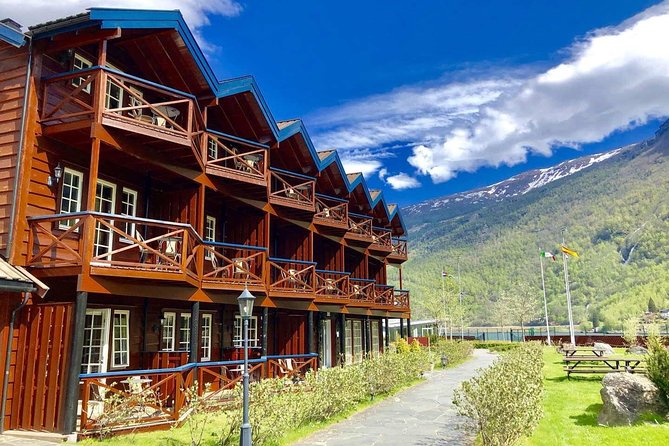
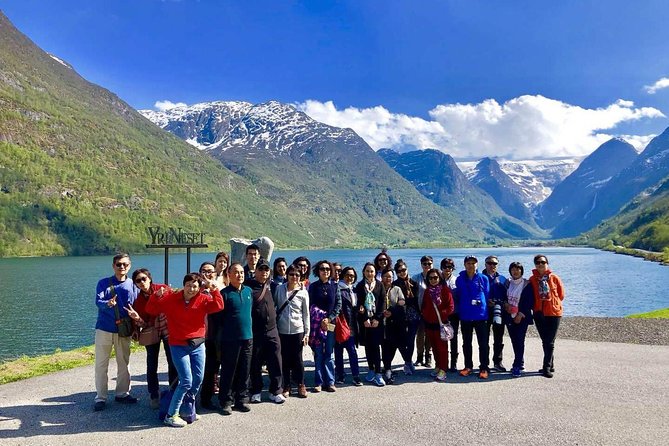
Day 4 is the first big Norway payoff. You head to Briksdal (Briksdalbreen), described as the largest glacier in continental Europe. What matters for you isn’t the superlative—it’s the proximity. This is built for those once-in-a-lifetime views where the glacier feels almost too close to be real.
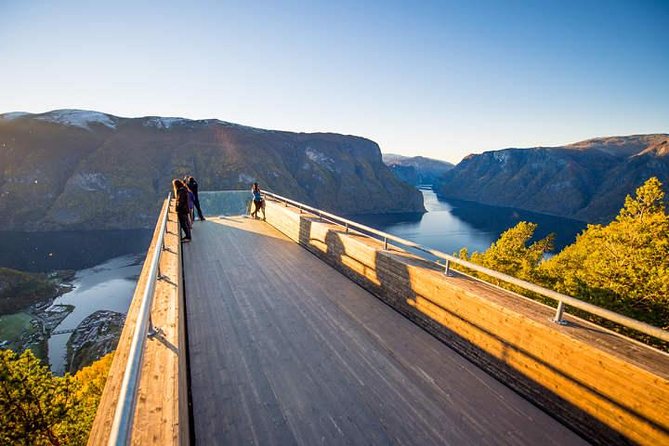
After breakfast, you move to the Jostedalsbreen National Park Centre, where you take cable cars for views over wildlife areas, clear streams, raging rivers, and waterfalls. The cable car ride is short (about half an hour), but it’s designed for maximum viewing time without turning into a whole-day production. After that, you get a short leisure window for photos (about ten minutes mentioned for close viewing).
Then you drive south toward Gudvangen. That transfer matters because it positions you for the fjord cruise the next day. This is also one of the places where weather sensitivity can show up. In one case, a glacier stop was canceled due to washed-out roads. So pack for rain and treat the plan as flexible.
If you only care about one Norway day, this is the one I’d protect. The glacier stop is the kind of memory that stays even after you forget the order of museums.
Sognefjord cruise and Flåmsbana railway: the fjord-fix in Flåm
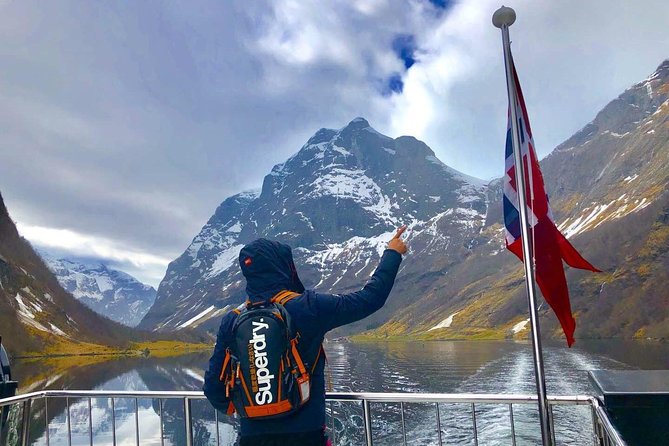
Day 5 is two classic “move through the scenery” experiences back-to-back.
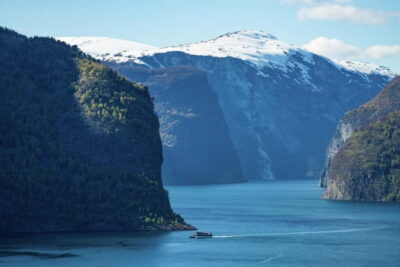
First, you travel to Gudvangen dock and join the Sognefjord cruise. The Sognefjord is presented as the world’s longest and deepest fjord, and the cruise is essentially your chance to appreciate the scale from the water. This is one of those activities where the guide’s job is mostly logistics, and your job is to keep looking.
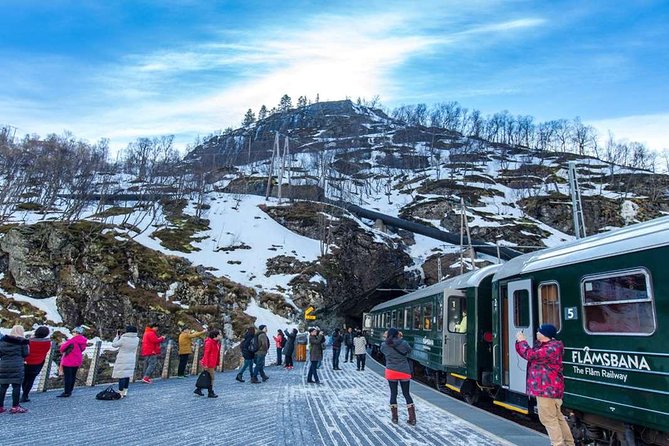
Then you arrive in Flåm and enjoy the Flåmsbana railway. This train ride is one of the big-name Norwegian experiences for a reason: it runs past fjords, waterfalls, and valleys. It’s also timed to keep you in the “spectacle window” of the day rather than just dumping you at a station.
In terms of flow, this works well because you go from water views to steep rail views without losing the Norwegian mood. And after the ride, you return to the hotel for dinner, which helps when you’re tired from early mornings and road time.
Consideration: if you hate sitting on coaches, this day won’t solve that. But if you enjoy scenery, it’s an efficient way to see fjords twice—once by boat, once by train.
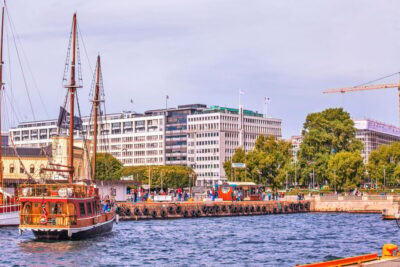
Oslo City Hall plus Vigeland Park: art and architecture with actual meaning
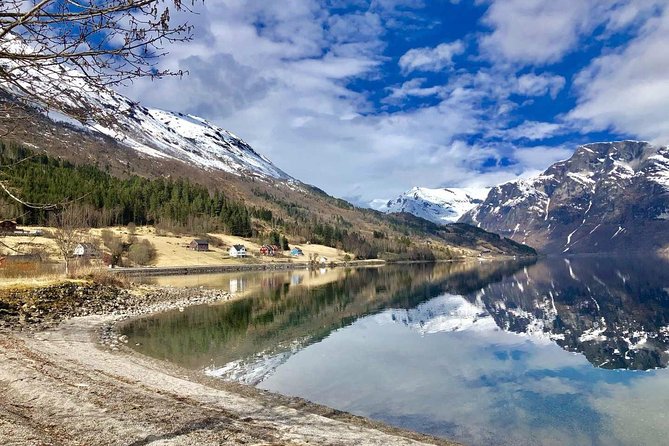
Day 6 is Oslo, but the tour doesn’t try to cover everything. It gives you strong hits in manageable blocks.
You’ll visit Oslo City Hall. The tour framing connects it to the Nobel Peace Prize ceremony in Oslo on December 10. Even if you’re not obsessed with awards, it’s a useful way to understand why the building matters.
Next comes Frogner Park and Vigeland Sculpture Park. The tour highlights Vigeland’s collection of more than 212 bronzes and granite statues. The key theme isn’t style—it’s the human condition: relationships among men and women, adults and children. That’s why this stop often lands well. You can look at the figures and instantly recognize the emotions, without needing a lecture.
This is also a more “walkable” day than the Norway nature blocks. You’ll have a chance to slow down, look closely, and decide what you connect with.
If you want a quiet evening in Oslo afterward, this is the day that gives you the best setup. You’ll finish with something memorable that isn’t just a viewpoint.
Gothenburg’s Poseidon statue and Feskekôrka: seafood smells, quick city closure
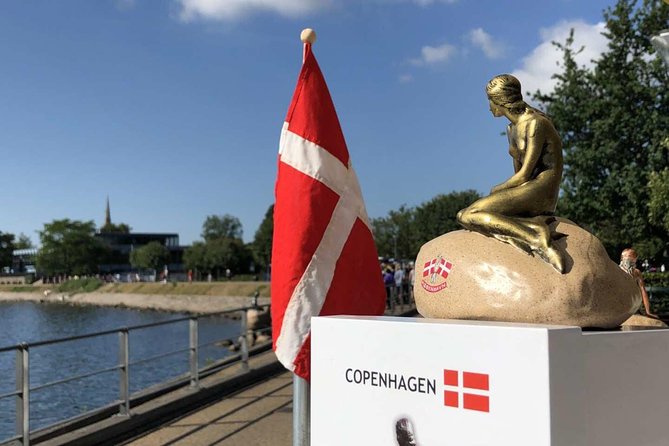
Day 7 winds down the whole trip in Gothenburg, before you head back toward Copenhagen.
You start at Götaplatsen, with Carl Milles’ seven-metre-high statue of the sea god Poseidon. It’s described as something that caused a stir at unveiling, which is a fun reminder that public art often comes with strong opinions.
Then you visit Feskekôrka, an indoor fish market hall. The tour frames it as an indoor market where you can buy seafood caught that day, and it’s a lively sensory stop. One reviewer also suggested that on the final day, stopping at the central station might be a better fit than the fish market time, because the market can feel like a lot if you just want a faster transfer and less sensory intensity. That’s a fair consideration if you have food sensitivities or you’re easily tired by crowds.
The city tour concludes at Gothenburg Cathedral (Domkyrkan Göteborg). After that, you travel back to Copenhagen in the evening.
This final day is practical. It’s not a deep dive into Swedish city life. It’s a “wrap it up and get home” finale with just enough variety to keep you interested.
Price and what you really get for about $1,161.99
Let’s talk value in plain terms. The total price includes: hotel rooms (3-star minimum with private facilities), daily breakfast (six breakfasts), air-conditioned coach transportation, and a tour manager who stays with you. The group size is capped at 30, so logistics are kept manageable.
What you’ll pay extra for is also listed: attraction admissions (many stops are marked as not included), plus lunch and dinner. Gratuities are not included and are listed as €10 per person per day, collected in cash by the tour manager. That doesn’t make the tour “cheap” or “expensive” by itself—it just means you should budget ahead instead of being surprised at the end.
Also note the Pink Line accommodation mention of a €10 per person per night living-standard charge. It says this is included in the price, which is good because it avoids an extra surprise later. Still, it’s a reminder that your hotel category can affect comfort and location.
So who gets the best value? People who want structure and don’t want to plan intercity routes, museum ordering, and fjord timing themselves. If you like independent travel and you’d rather control every stop, you might find better value by building your own routing. But for a single multi-country week, this is built for convenience.
The real on-the-road experience: buses, early mornings, and tour manager style
Most of the reviews you provided land on the same theme: organization and safety. Tour managers like Mirjam, Kim, Daniel, Danielle, and Dan were praised for keeping time tight and making stops feel like something more than a photo sprint. Drivers like Silver were specifically mentioned for calm, skilled driving on winding roads.
That doesn’t mean it’s effortless. One review pointed out the glacier stop being canceled due to a washed-out road, and another noted how much time there is on the bus. Another mention was that city explanations in Copenhagen and Stockholm may feel more like an overview than deep cultural context.
Language can also shape your experience. The tour is offered in English, but the operator may combine English and Chinese speaking customers on the same bus if there are fewer travelers. The tour leader is said to be able to speak both English and Chinese and service the preferred language, but in at least one review the English explanations were described as limited. If language depth matters to you, I’d consider that when deciding.
One more practical note: expect early wake-ups. A review explicitly mentioned waking up early every day. If you’re the type who enjoys long mornings, you’ll want to adjust expectations before you go.
Who should book this Scandinavia coach loop, and who should reconsider
This tour suits you if you want a one-week hit of three countries with a plan already built. You’ll likely enjoy it most if:
- you love scenery days and can handle coach time,
- you’re happy with guided highlights in major cities,
- you want someone else to handle hotel locations and transfer timing.
You might reconsider or plan extra nights if:
- you want deep, slow exploration of Copenhagen or Stockholm culture and history,
- you dislike “fixed schedule” travel and prefer flexible pacing,
- you’re very sensitive to long bus days.
The Norway block is the headline for many people. If you’re buying this trip for fjords, glaciers, and a train ride in waterfalls country, you’re likely in the right place.
Should you book this Scandinavia Loop? My decision checklist
Book it if you want maximum sights per week with hotel beds, breakfasts, and coach logistics handled. I’d also say it’s a strong choice if you’d rather trust a professional driver and tour manager to manage timing, especially on mountain roads and tight connection days.
Pass or tweak the plan if you’re chasing slow city time, museum immersion, or a travel style that avoids early mornings. In that case, consider adding extra days in Copenhagen and Stockholm yourself, then joining Norway for the glacier and fjords.
A simple checklist before you click:
- Are you okay with lots of coach hours?
- Can you budget for museum admissions, lunch, dinner, and the listed daily gratuity?
- Do you pack for weather changes (rain gear helps in Norway)?
- Do you want a guided highlights style rather than deep independent wandering?
If you answered yes to those, this is a well-structured way to see Scandinavian variety fast.
FAQ
Where is the tour meeting point and what time does it start?
The meeting point is København HBernstorffsgade, 1651 København, Denmark, and the start time is 9:00 am.
How long is the tour?
It runs for 7 days approximately.
What countries does the itinerary cover?
You’ll visit Denmark (starting and ending in Copenhagen), Sweden (including Stockholm and Gothenburg), and Norway.
Is the tour offered in English?
Yes, it is offered in English. If needed, English and Chinese speaking customers can be combined on the same bus, and the tour leader can speak both languages while servicing the preferred language.
What’s included in the tour price?
Included items are accommodation in a comfortable 3-star (min.) hotel with private facilities, daily transportation on modern air-conditioned coaches, the services of an experienced tour manager, and breakfast for 6 days.
Are attraction tickets included for the listed stops?
Admission tickets are not included for the attractions listed in the stops.
Are lunch and dinner included?
Lunch and dinner are not included.
How much are gratuities and how are they paid?
Gratuities are €10 per person per day and are collected by the tour manager in cash while on tour.
How big are the groups?
The tour has a maximum of 30 travelers.
What luggage limits should I follow?
You are allowed one luggage on board with a maximum weight of 30 kg, plus one small hand carry on (purse, backpack, or camera bag).
How long should my passport be valid?
Your passport must be valid for at least 6 months.
When can I cancel for a full refund?
You can cancel up to 3 days in advance for a full refund. Cut-off times are based on the experience’s local time.